A historical building card is ideal for Uzbekistan, with Samarkand, Bukhara and Khiva to choose from. Describe the outside, the inside and the importance in separate parts. Soften any fact you are not sure of with "it's often said" or "I think".
The cue card
Describe a historical building you have visited.
You should say:
what the building is
where it is
what you saw there
and explain why it is important.
One-minute notes
- what: Gur-e-Amir, Amir Temur's mausoleum, early 1400s
- where: Samarkand; visited last autumn with cousins from abroad
- saw: ribbed turquoise dome, gold and blue inside, dark green tombstone, the 1941 legend
- why: symbol of the Timurid age, often said to have influenced the Taj Mahal
Model answer (about 2 minutes)
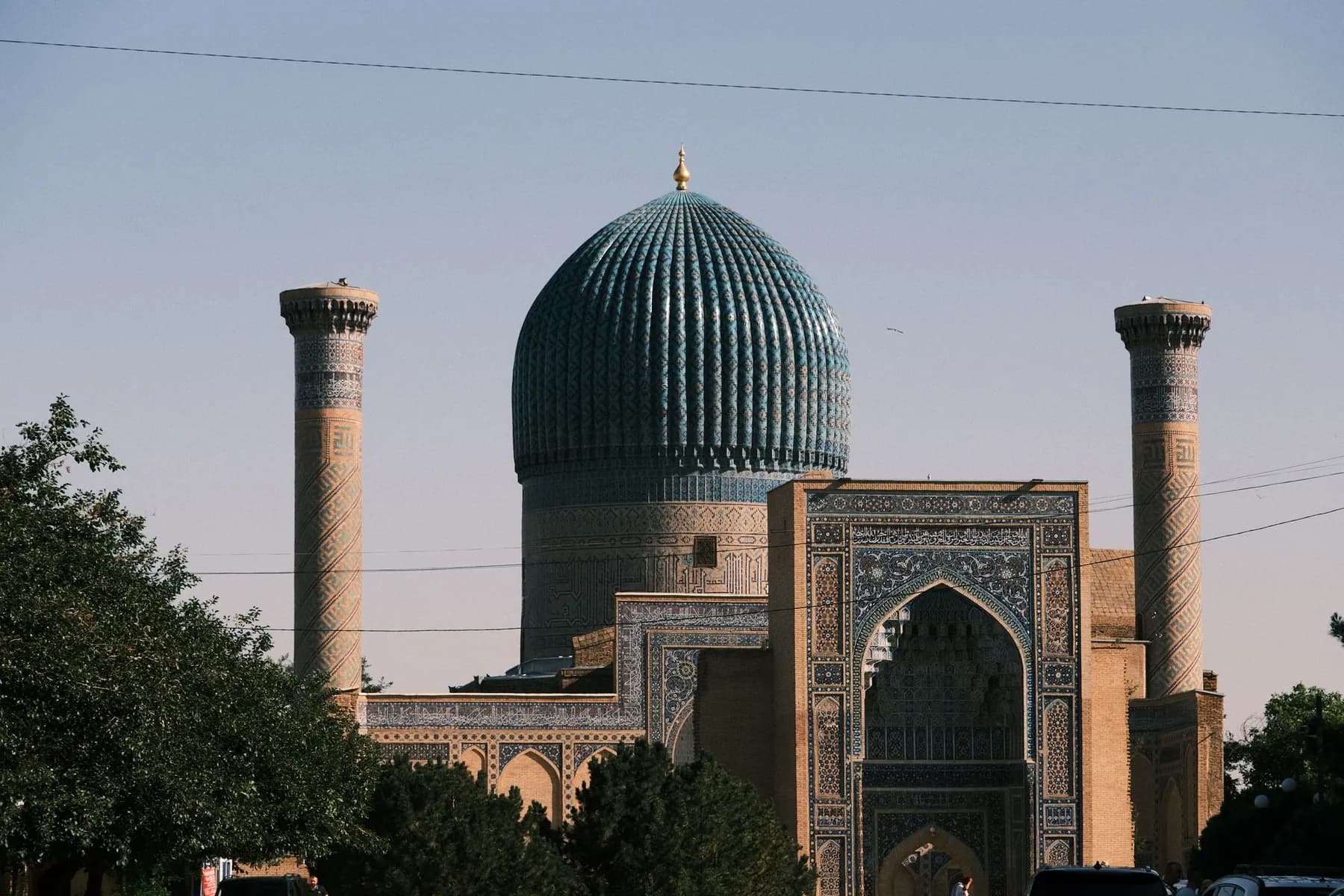
The historical building I'd like to describe is Gur-e-Amir, the mausoleum of Amir Temur in Samarkand. I visited it last autumn with my cousins, who were visiting from abroad.
It was built in the early fifteenth century, and from the outside the first thing you notice is the dome. It's ribbed, a bit like a melon, and covered in turquoise tiles that seem to change colour depending on the light.
Inside, it was even more impressive. The walls and ceiling are decorated with gold and deep blue patterns, and it's surprisingly quiet, even when there are lots of visitors. In the centre there's a dark green stone, jade, I think, marking Amir Temur's tomb. Our guide also told us a famous legend: that when scientists opened the tomb in 1941, war broke out just days later. Whether it's true or not, everyone went silent for a moment.
I think the building is important for two reasons. First, it's a symbol of the Timurid period, when Samarkand was one of the great cultural centres of the world. And second, it's often said that its design influenced later monuments in India, including the Taj Mahal, which shows how far the ideas of our architects travelled.
Standing there made me feel genuinely proud of where I come from.
Useful words and phrases
| Phrase | Meaning |
|---|---|
| a mausoleum | a mausoleum |
| ribbed | ribbed |
| tiles | tiles |
| depending on the light | depending on the light |
| war broke out | war broke out |
| go silent | go silent |
| a symbol of | a symbol of |
| where I come from | where I come from |
How to answer
- Open with one vivid outside detail: "the first thing you notice is the dome".
- Signal the move inside: "Inside, it was even more impressive".
- Give the legend in reported speech and keep your distance: "Whether it's true or not...".
- Split the importance into two reasons: "First..., And second...".

Practise this topic now
The AI examiner asks you these questions, listens to your answers and shows your mistakes.
Part 3: follow-up discussion questions
Why is it important to protect historical buildings?
Because they're a physical link to the past. You can read about history in a book, but standing in a building that's six hundred years old makes it real in a way nothing else does. Once they're gone, they can't be replaced.
Should old buildings be replaced with modern ones?
Not the important ones. Ordinary old buildings that are unsafe can be replaced, but historic monuments should be restored instead. The best cities build new areas around their old centres rather than on top of them.
Do young people in your country care about history?
Who should pay for the restoration of historical sites?
Part 2 strategy: the cue card guide. Next step: the Part 3 guide.
Practise this topic now
The AI examiner asks you these questions, listens to your answers and shows your mistakes.