Tarixiy bino haqidagi cue card O‘zbekiston uchun ideal: Samarqand, Buxoro, Xivada tanlov ko‘p. Tashqi ko‘rinish, ichki qism va ahamiyatni alohida qismlarda tasvirlang. Ishonchingiz komil bo‘lmagan faktni «it's often said» yoki «I think» bilan yumshating.
Cue card
Describe a historical building you have visited.
You should say:
what the building is
where it is
what you saw there
and explain why it is important.
1 daqiqalik qoralama
- what: Gur-e-Amir, Amir Temur's mausoleum, early 1400s
- where: Samarkand; visited last autumn with cousins from abroad
- saw: ribbed turquoise dome, gold and blue inside, dark green tombstone, the 1941 legend
- why: symbol of the Timurid age, often said to have influenced the Taj Mahal
Namunaviy javob (taxminan 2 daqiqa)
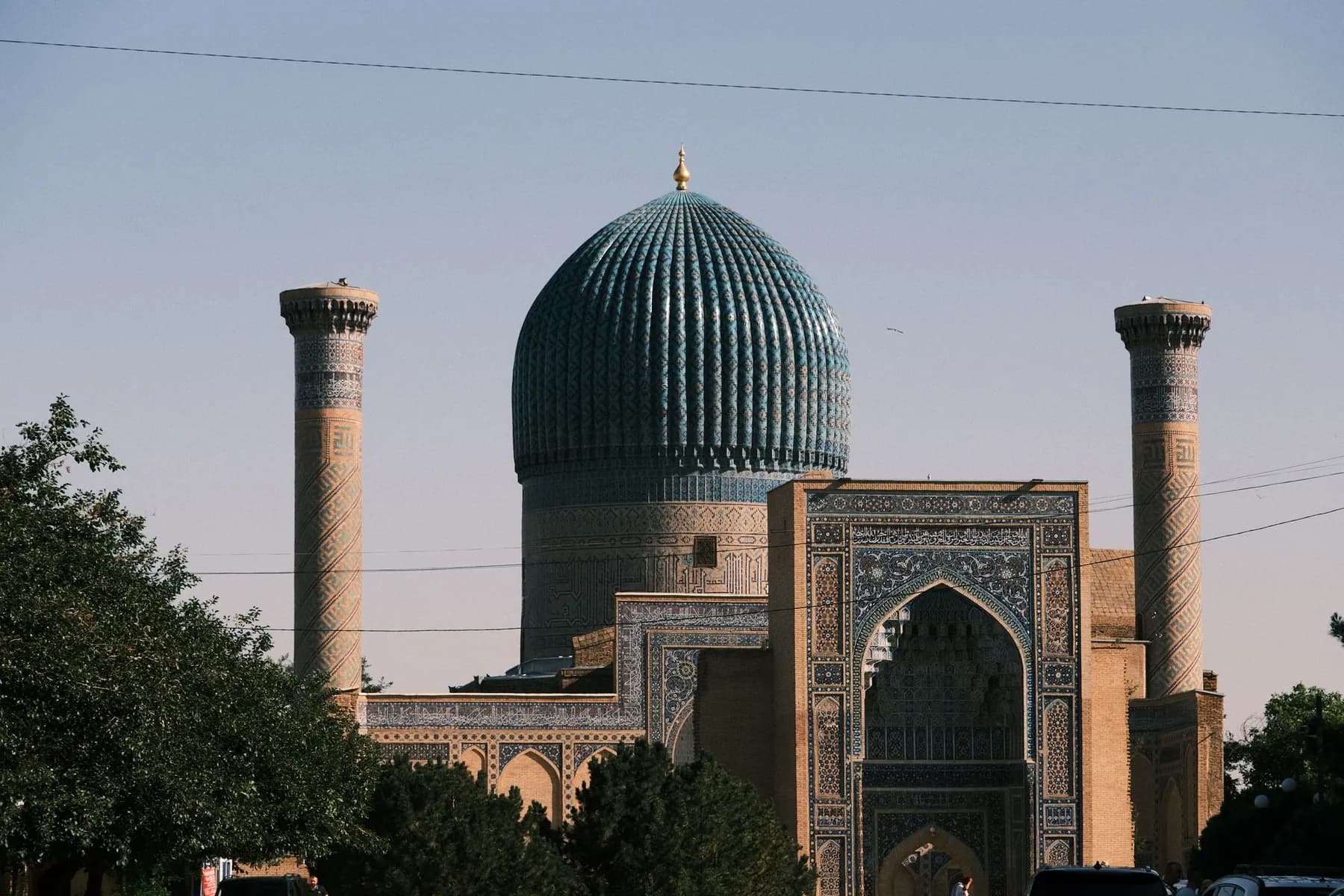
The historical building I'd like to describe is Gur-e-Amir, the mausoleum of Amir Temur in Samarkand. I visited it last autumn with my cousins, who were visiting from abroad.
It was built in the early fifteenth century, and from the outside the first thing you notice is the dome. It's ribbed, a bit like a melon, and covered in turquoise tiles that seem to change colour depending on the light.
Inside, it was even more impressive. The walls and ceiling are decorated with gold and deep blue patterns, and it's surprisingly quiet, even when there are lots of visitors. In the centre there's a dark green stone, jade, I think, marking Amir Temur's tomb. Our guide also told us a famous legend: that when scientists opened the tomb in 1941, war broke out just days later. Whether it's true or not, everyone went silent for a moment.
I think the building is important for two reasons. First, it's a symbol of the Timurid period, when Samarkand was one of the great cultural centres of the world. And second, it's often said that its design influenced later monuments in India, including the Taj Mahal, which shows how far the ideas of our architects travelled.
Standing there made me feel genuinely proud of where I come from.
Foydali so‘z va iboralar
| Ibora | Ma’nosi |
|---|---|
| a mausoleum | maqbara |
| ribbed | qovurg‘ali |
| tiles | koshinlar |
| depending on the light | yorug‘likka qarab |
| war broke out | urush boshlandi |
| go silent | jim bo‘lib qolish |
| a symbol of | ... ramzi |
| where I come from | kelib chiqishim, vatanim |
Qanday javob berish kerak
- Tashqi ko‘rinishni bitta yorqin detal bilan oching: «the first thing you notice is the dome».
- Ichki qismga o‘tishni belgilang: «Inside, it was even more impressive».
- Afsonani reported speech bilan bering va masofa saqlang: «Whether it's true or not...».
- Ahamiyatni ikki sababga ajrating: «First..., And second...».

Shu mavzuni hozir mashq qiling
AI imtihonchi sizga shu savollarni beradi, javobingizni tinglaydi va xatolaringizni ko‘rsatadi.
Part 3: davomidagi muhokama savollari
Why is it important to protect historical buildings?
Because they're a physical link to the past. You can read about history in a book, but standing in a building that's six hundred years old makes it real in a way nothing else does. Once they're gone, they can't be replaced.
Should old buildings be replaced with modern ones?
Not the important ones. Ordinary old buildings that are unsafe can be replaced, but historic monuments should be restored instead. The best cities build new areas around their old centres rather than on top of them.
Do young people in your country care about history?
Who should pay for the restoration of historical sites?
Part 2 strategiyasi: cue card qo‘llanmasi. Keyingi bosqich: Part 3 qo‘llanmasi.
Shu mavzuni hozir mashq qiling
AI imtihonchi sizga shu savollarni beradi, javobingizni tinglaydi va xatolaringizni ko‘rsatadi.