Here you talk about a place you have not seen yet, so the key grammar is conditional and future forms: "I'd love to", "If I went there, I'd...". A good chance for your grammar score.
The cue card
Describe a city you would like to visit.
You should say:
which city it is
how you know about it
what you would like to do there
and explain why you would like to visit it.
One-minute notes
- city: Kyoto, Japan
- know: documentaries, a friend's photos, anime as a kid
- do: temples early morning, autumn leaves, tea ceremony, bike
- why: old and new together, calm, see something completely different
Model answer (about 2 minutes)
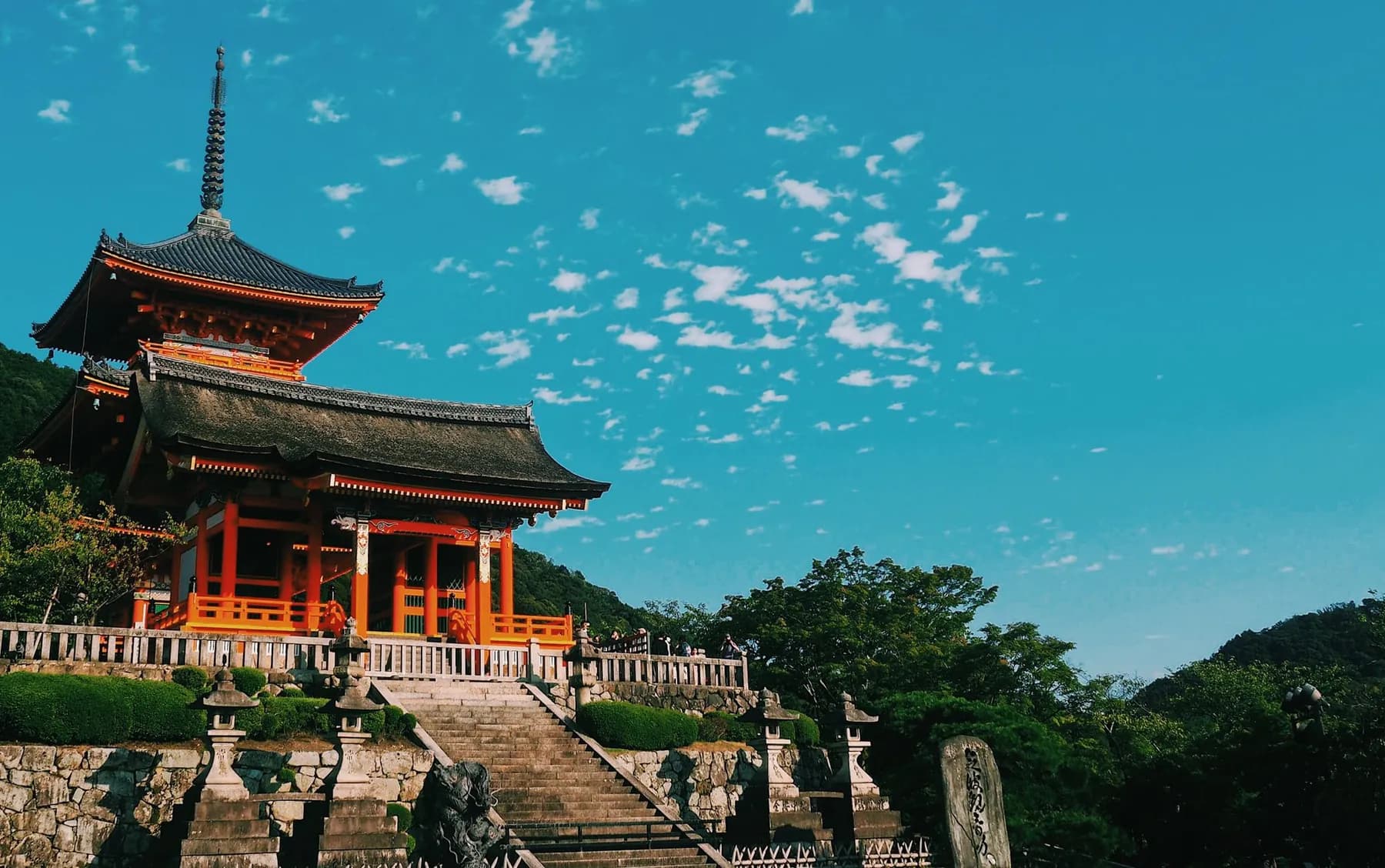
The city I'd most like to visit is Kyoto, in Japan. It was the capital of Japan for more than a thousand years, and it's known for its temples, gardens and traditional wooden houses.
I first became curious about it through documentaries, but what really made me want to go was a friend who studied there for a semester. She sent me photos almost every day, and each one looked like a painting.
If I went there, I'd try to go in autumn, when the maple trees turn bright red. I'd get up really early to see the famous temples before the crowds arrive, and I'd love to rent a bike and just ride along the river without a plan. I'd also like to try a proper tea ceremony, because I've read that it's less about the tea and more about slowing down and paying attention.
The main reason I want to visit is that Kyoto seems to keep its traditions without rejecting the modern world. Tashkent is changing very fast, and sometimes I feel we lose old places too easily, so I'd like to see how another city manages to protect its history while still moving forward.
It's not a cheap trip, so I'm saving for it, but I'm hoping to go within the next few years.
Useful words and phrases
| Phrase | Meaning |
|---|---|
| become curious about | become curious about |
| before the crowds arrive | before the crowds arrive |
| a proper tea ceremony | a proper tea ceremony |
| slow down | slow down |
| protect its history | protect its history |
| move forward | move forward |
| take for granted | take for granted |
| souvenir stalls | souvenir stalls |
How to answer
- Chain conditionals: "If I went there, I'd... I'd also...".
- How you found out about the city adds past tenses.
- Comparing it with your own city strengthens the "why".
- End with a real plan: "I'm saving for it", "I'm hoping to go...".

Practise this topic now
The AI examiner asks you these questions, listens to your answers and shows your mistakes.
Part 3: follow-up discussion questions
Why do people like travelling to other countries?
Partly curiosity, and partly to get a break from routine. Seeing how other people live also makes you notice things about your own culture that you'd normally take for granted.
Can tourism damage a city?
It can, if it isn't controlled. When too many visitors come, rents go up, local shops are replaced by souvenir stalls and residents feel like strangers in their own neighbourhood.
Is it better to travel alone or in a group?
How will travel change in the future?
Part 2 strategy: the cue card guide. Next step: the Part 3 guide.
Practise this topic now
The AI examiner asks you these questions, listens to your answers and shows your mistakes.