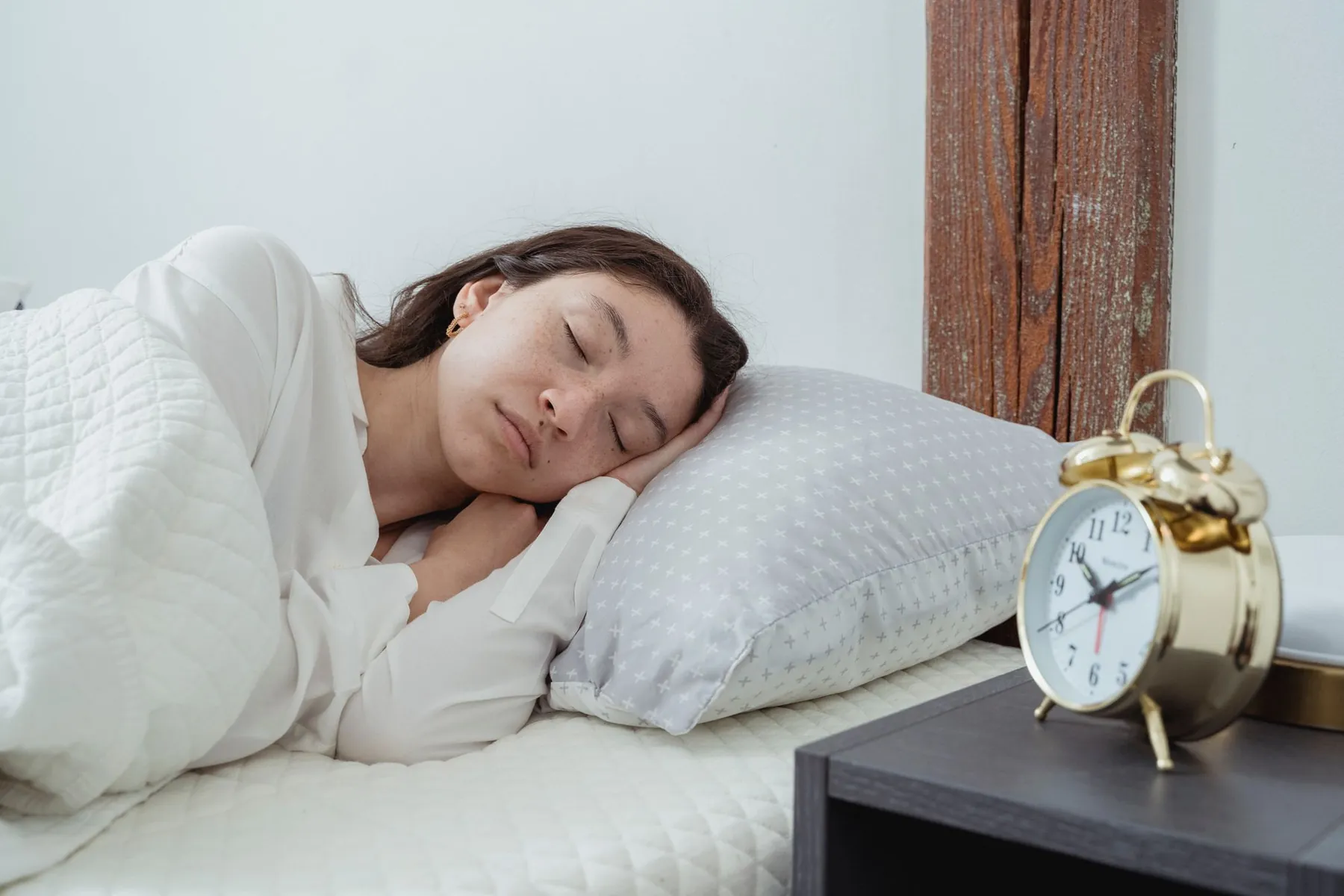
Questions about sleep and routine look simple, but they let you show habits (the present simple), frequency words and change.
What the examiner asks on this topic
What time do you usually get up?
Are you a morning person or a night person?
How many hours do you usually sleep?
Do you ever take naps during the day?
Is your weekend routine different from your weekday routine?
Model answers (aimed at band 7+)
Are you a morning person or a night person?
Definitely a night person, unfortunately. My brain seems to wake up at about ten in the evening, which is great for studying but terrible when I have an early lecture the next day.
How many hours do you usually sleep?
Around six or seven on weekdays, which I know isn't quite enough. I try to catch up at the weekend, but I've read that doesn't really work, so I'm trying to go to bed a bit earlier.
Do you ever take naps during the day?
Only in summer, when it's too hot to do anything after lunch. A twenty-minute nap makes me much more productive in the afternoon, but if I sleep any longer I wake up feeling worse.
Is your weekend routine different from your weekday routine?
Completely. On weekdays everything revolves around my timetable, but at weekends I sleep in, have a long breakfast with my family and only plan one or two things for the whole day.
Useful words and phrases
| Phrase | Meaning |
|---|---|
| a morning person | a morning person |
| a night person | a night person |
| catch up on sleep | catch up on sleep |
| take a nap | take a nap |
| productive | productive |
| revolve around | revolve around |
| sleep in | sleep in |
| a timetable | a timetable |
How to answer
- For habits, use the present simple and frequency words: "usually", "hardly ever", "on weekdays".
- Be precise with numbers: "around six or seven hours".
- Compare two situations: weekdays and weekends.
- Add a fix or a plan: "I'm trying to...".
Practise this topic now
The AI examiner asks you these questions, listens to your answers and shows your mistakes.
Everything about Part 1: the Part 1 guide. More topics: all articles.
Practise this topic now
The AI examiner asks you these questions, listens to your answers and shows your mistakes.