A skill cue card asks you to tell a process: the start, the difficulty, the result. It is one of the best chances to show a range of tenses.
The cue card
Describe a skill you learned that you are proud of.
You should say:
what the skill is
when and how you learned it
how difficult it was
and explain why you are proud of it.
One-minute notes
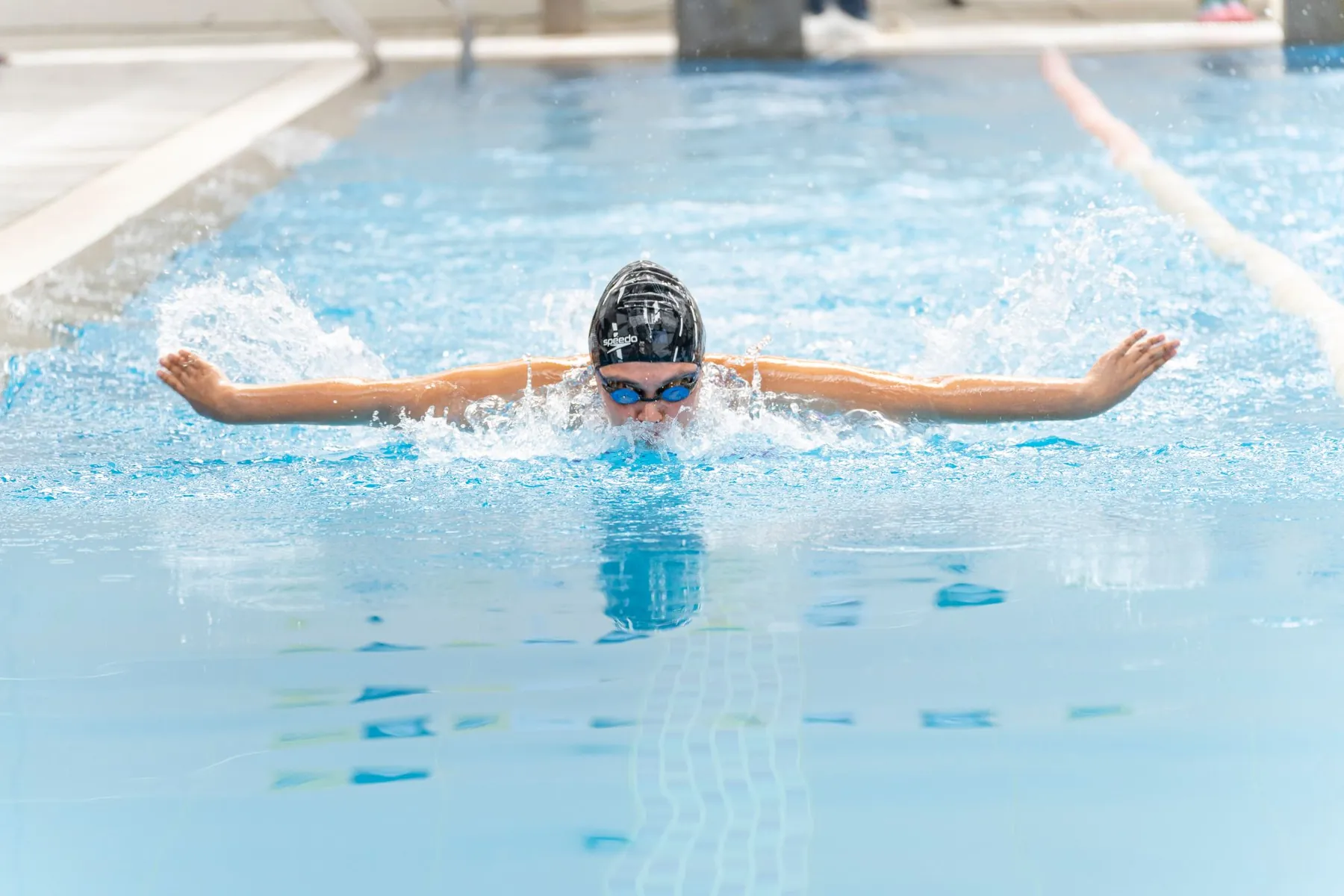
- what: swimming, learned at 19
- how: city pool, adult beginners group, 3 times a week
- difficult: afraid of deep water, first month just breathing
- proud: overcame fear, swam across the pool, now teach my brother
Model answer (about 2 minutes)
The skill I'd like to talk about is swimming, which might sound strange, because most people learn it as children. I didn't, though, and I only learned when I was nineteen.
Growing up, I'd always been a bit afraid of deep water, so I avoided it and just made excuses whenever my friends went to the pool. Eventually I got tired of feeling left out, and two years ago I signed up for an adult beginners' group at a pool in our city. We had lessons three times a week for about four months.
To be honest, it was much harder than I'd expected. For the first month we barely swam at all: the instructor made us practise breathing and floating, and I felt pretty embarrassed being the oldest beginner there. A couple of times I almost quit.
What I'm proud of is that I didn't give up. By the end of the course I could swim the full length of the pool without stopping, and that moment, touching the wall at the other end, is one of my best memories. It wasn't really about swimming. It was about facing something I'd been scared of for years.
Now I'm actually teaching my younger brother, which feels a little funny considering how nervous I used to be.
Useful words and phrases
| Phrase | Meaning |
|---|---|
| feel left out | feel left out |
| sign up for | sign up for |
| harder than I'd expected | harder than I'd expected |
| barely | barely |
| embarrassed | embarrassed |
| almost quit | almost quit |
| face something | face something |
| considering how... | considering how... |
How to answer
- Tell the process in stages: "At first...", "After a month...", "By the end...".
- Do not hide the difficulty: a success story is more interesting with a struggle in it.
- Mix tenses: past perfect (I'd been afraid), past simple (I signed up), present (now I teach).
- Instead of "proud": "it gave me confidence", "it meant a lot to me".
Practise this topic now
The AI examiner asks you these questions, listens to your answers and shows your mistakes.
Part 3: follow-up discussion questions
Is it better to learn skills as a child or as an adult?
Children usually pick up physical skills and languages faster, partly because they're less afraid of making mistakes. Adults, on the other hand, are often more motivated, because they've chosen to learn rather than being told to.
What skills should schools teach that they don't teach now?
I think practical things like managing money and cooking. Many young people leave school knowing complicated formulas but not how to make a budget, which seems a bit backwards to me.
Can people learn skills well from online videos?
Why do some people give up learning new skills?
Part 2 strategy: the cue card guide. Next step: the Part 3 guide.
Practise this topic now
The AI examiner asks you these questions, listens to your answers and shows your mistakes.